
The Asset Integrity engine continuously evaluates the health of digital financial products by monitoring their underlying structure, financial condition, governance, and operational resilience. Rather than relying on price movements alone, Webacy analyzes the underlying factors that determine whether an asset remains healthy over time. Built for institutional assets such as stablecoins, vaults, and tokenized real-world assets (RWAs), Asset Integrity provides real-time intelligence that helps issuers, exchanges, asset managers, regulators, and AI systems detect emerging risks before they become market events.
For a live view of this in action, visit DD.xyz!

Stablecoins

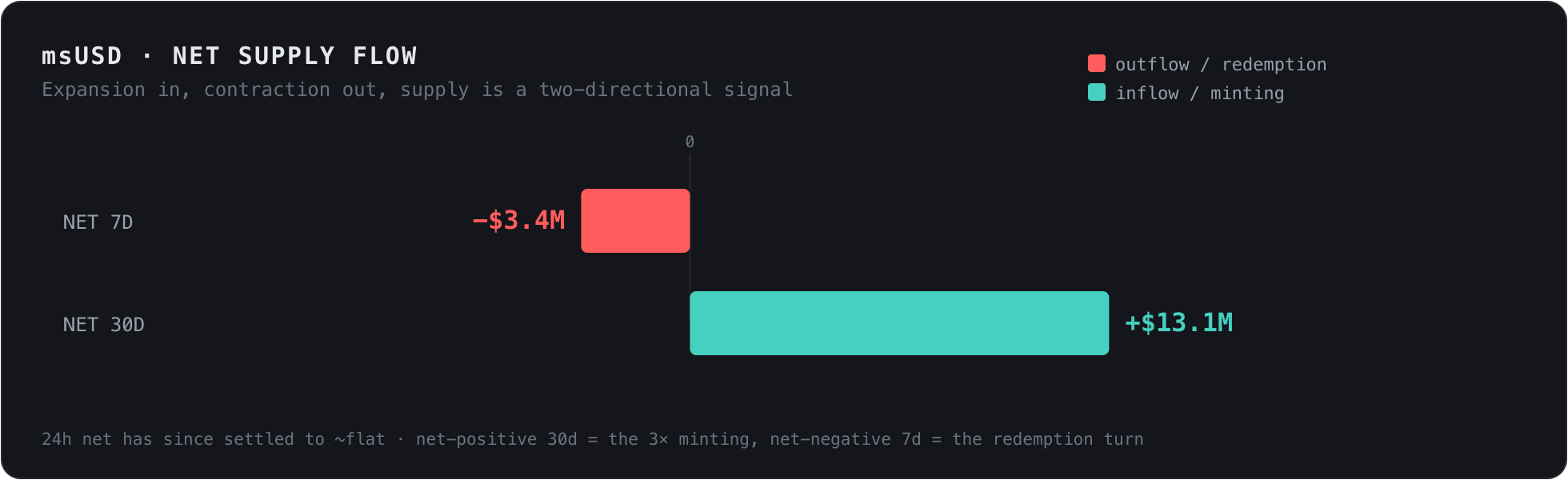
Stablecoins require continuous monitoring because their risk profile can change long before their market price does. The Asset Integrity engine evaluates reserve quality, redemption activity, liquidity, holder concentration, collateral composition, governance, market behavior, and dozens of other financial and operational signals to identify structural weaknesses as they emerge.
6a7399480235869f5a9e72d3 6d96d5d1
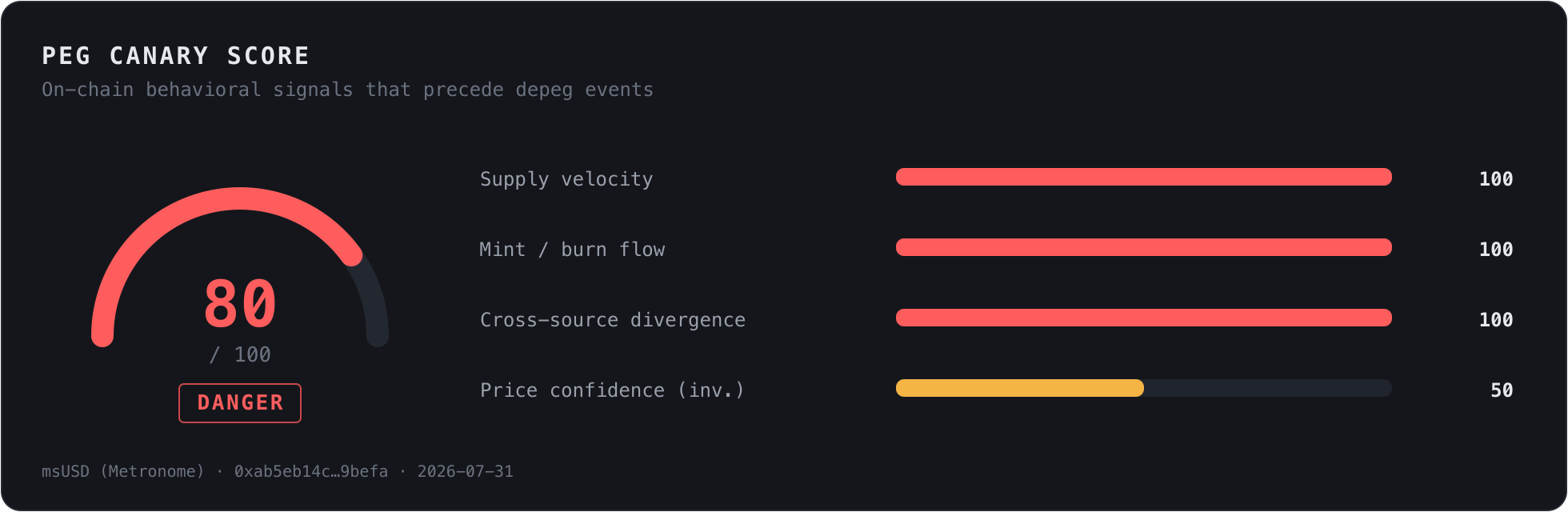
One example is Webacy’s Peg Canary, an early-warning system designed to detect conditions commonly associated with future depeg events. Rather than monitoring price alone, Peg Canary identifies changes in the underlying health of a stablecoin that may indicate increasing redemption pressure, liquidity deterioration, or financial instability before the peg is affected.
6a7399480235869f5a9e72df 03380c5d
Common use cases
  • Stablecoin monitoring
  • Treasury management
  • Exchange listing reviews
  • Reserve risk assessment
  • Depeg early warning
  • Institutional due diligence

Vaults

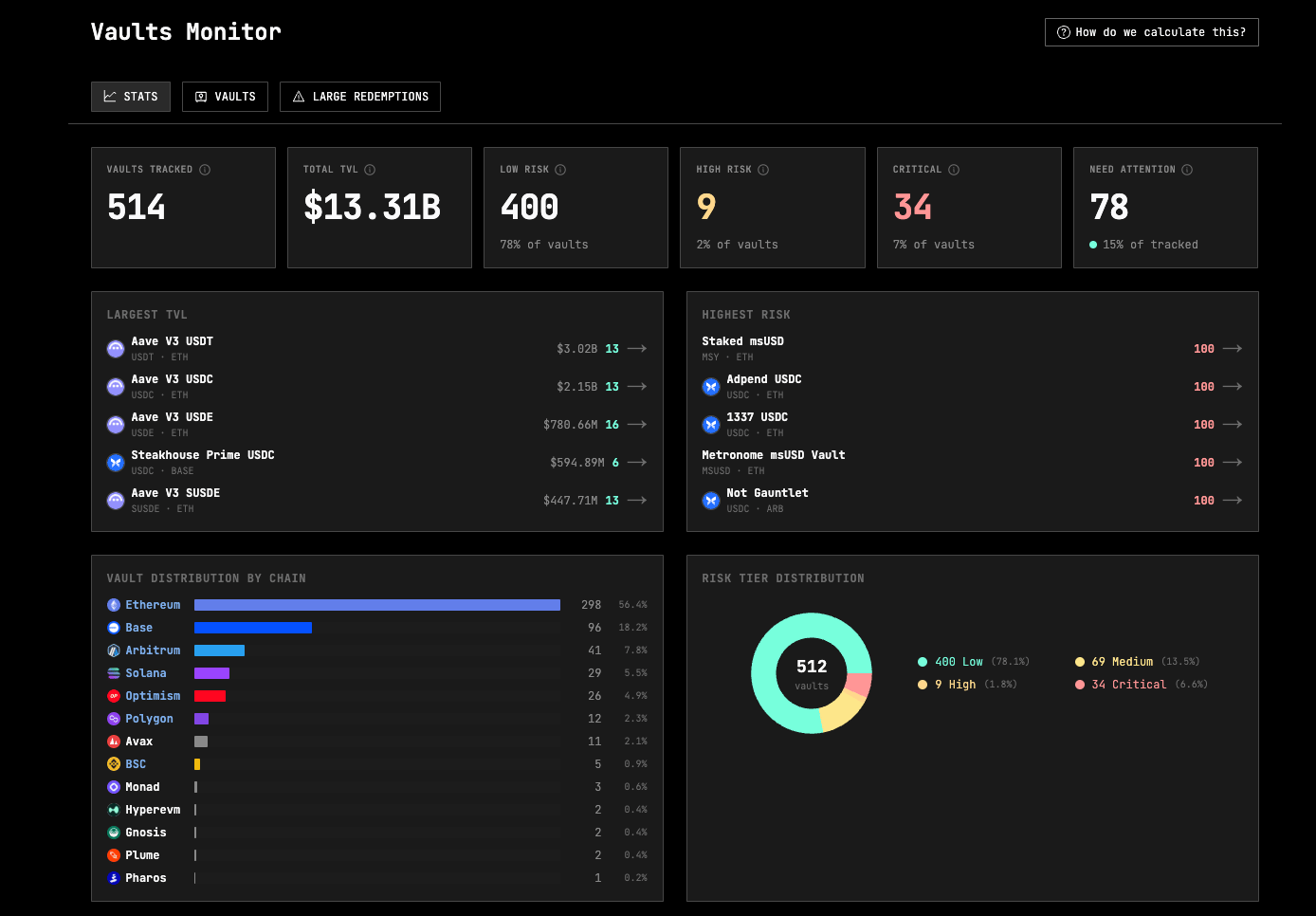
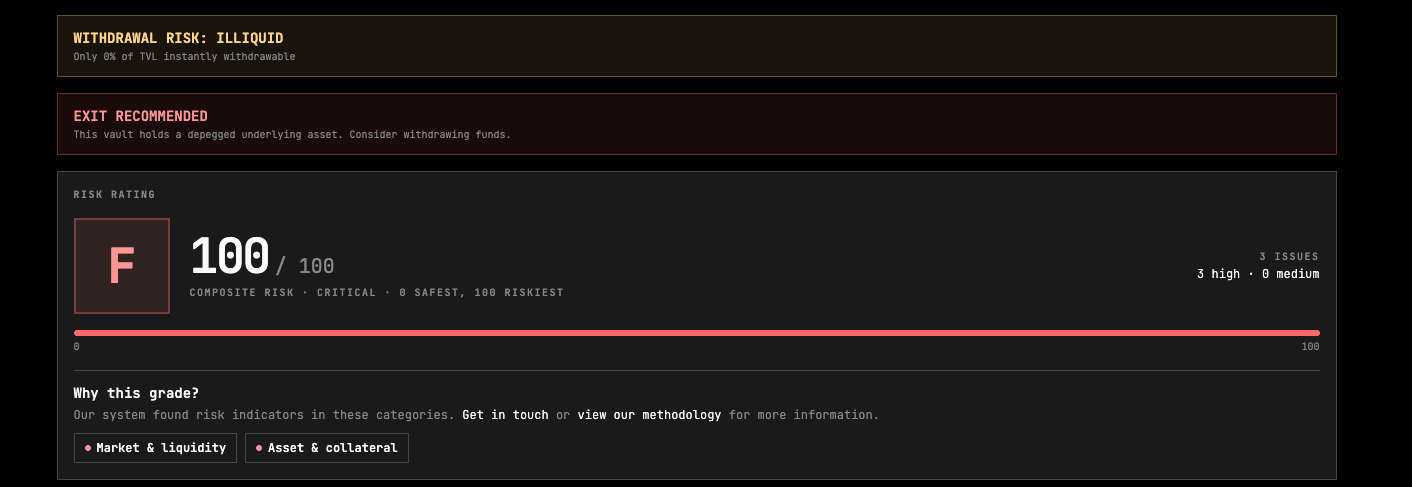
Vaults inherit risk from both their own design and the assets they manage. Webacy continuously evaluates vault strategies, collateral quality, governance, liquidity, smart contract dependencies, protocol integrations, and financial health to identify risks that may impact users or capital allocators.
Screenshot 2026 08 06 At 5 07 15 PM
The engine also performs cascading risk analysis, monitoring the assets and protocols that underpin a vault. When risk increases in an underlying collateral asset, dependency, or integrated protocol, those changes can automatically influence the vault’s own risk profile and trigger alerts before the impact is fully realized.
Screenshot 2026 08 06 At 5 07 42 PM
This allows organizations to monitor not only the vault itself, but the entire network of dependencies that supports it. Common use cases
  • Vault monitoring
  • Treasury allocation
  • Collateral risk management
  • Institutional due diligence
  • Protocol monitoring
  • Real-time risk alerts

Real World Assets (RWAs)

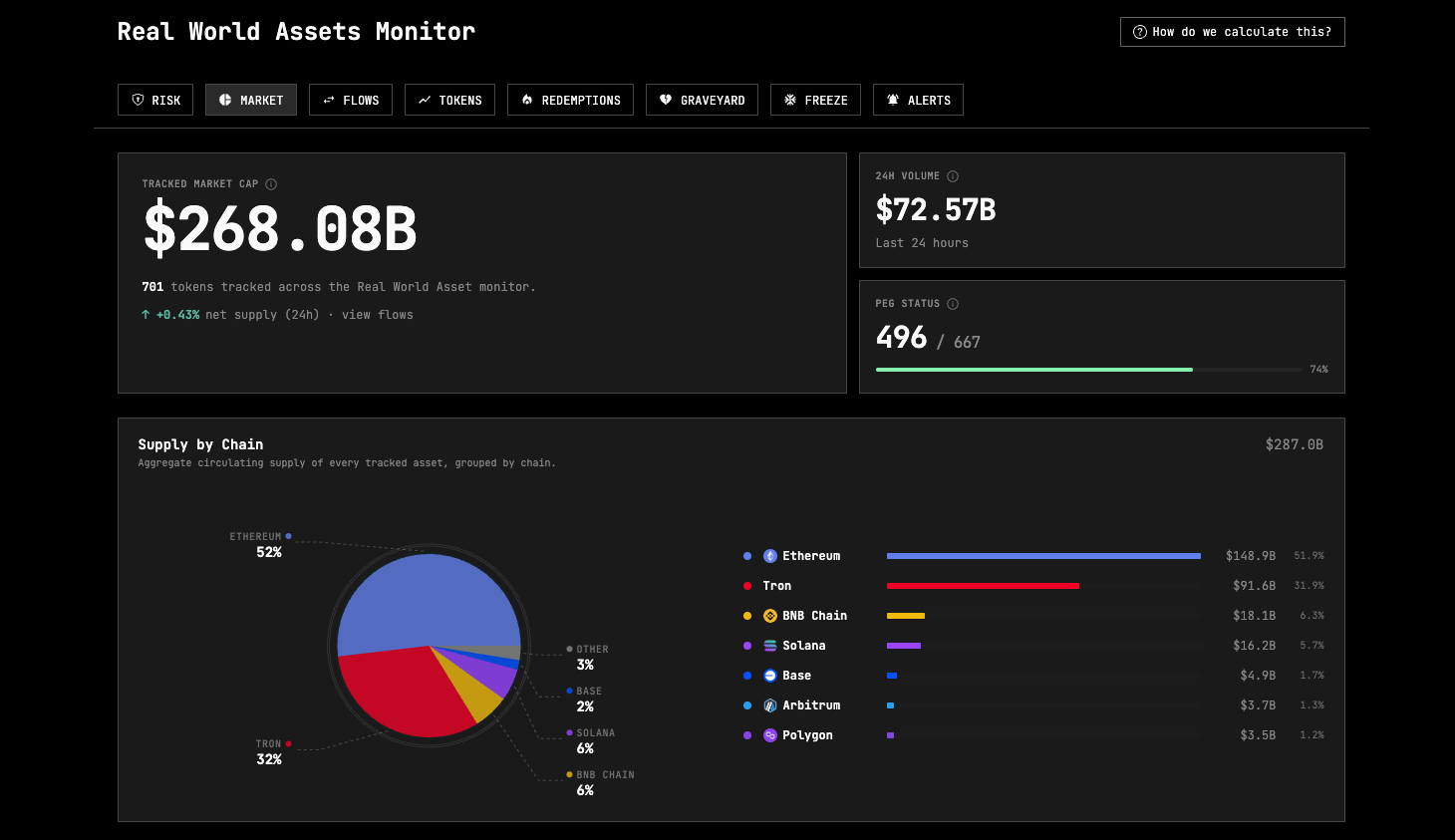
Tokenized financial products introduce risks that extend beyond blockchain infrastructure. The Asset Integrity engine evaluates the financial, operational, governance, and structural characteristics of RWAs while considering the unique attributes of their underlying assets.
Screenshot 2026 08 06 At 5 09 29 PM
Different categories of RWAs require different methodologies. For example, tokenized Treasury funds, gold-backed assets, private credit, money market funds, and tokenized deposits each introduce distinct considerations around collateral quality, redemption mechanics, issuer obligations, and operational transparency. By combining blockchain intelligence with asset-specific methodologies, Webacy provides continuous oversight of digital financial products as they evolve. Common use cases
  • RWA due diligence
  • Institutional onboarding
  • Continuous issuer monitoring
  • Treasury risk management
  • Portfolio oversight
  • Regulatory reporting

Real-Time by Design

Traditional financial risk assessments are often performed periodically through audits, disclosures, or manual reviews. The blockchain operates continuously, and so does the Asset Integrity engine. By monitoring blockchain activity, financial conditions, governance events, and operational changes in real time, Webacy enables organizations to identify meaningful changes in asset health as they occur, supporting faster decisions, automated policies, and continuous risk management across the digital asset ecosystem.

What’s Next

Compliance

Identify sanctions exposure, address poisoning, and other compliance risks using real-time blockchain intelligence.