

What It Analyzes
Transaction Monitoring combines multiple analytical techniques to understand both the intent and impact of a transaction, including:- Transaction screening
- Fund flow analysis
- Counterparty relationships
- Transaction simulation (pre-sign)
- Asset movement
- Protocol interactions
- Cross-chain activity
- Historical transaction patterns
Fund Flow Analysis
Webacy traces how assets move across wallets, contracts, protocols, and chains to uncover the broader context behind a transaction. This supports investigations, source-of-funds analysis, exposure mapping, and multi-hop screening, helping organizations identify indirect connections to malicious, sanctioned, or otherwise high-risk entities that may not be visible from the immediate counterparty alone.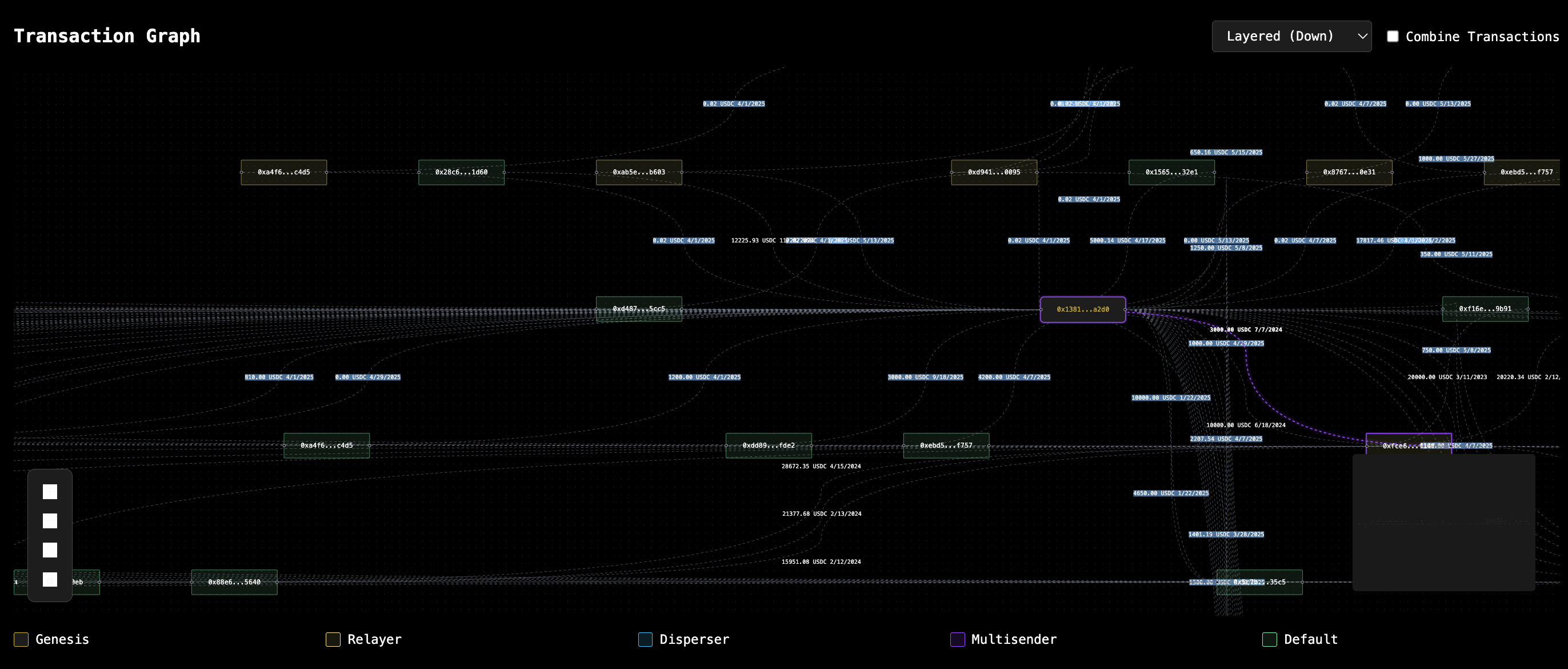
Transaction Simulation
Webacy simulates transactions before they are signed or executed to identify what they are expected to do and whether the outcome introduces risk. Simulation can surface unexpected asset transfers, dangerous approvals, malicious contract interactions, changes in permissions, and other execution risks, enabling wallets, applications, policy engines, and AI agents to warn, block, or escalate transactions before funds move.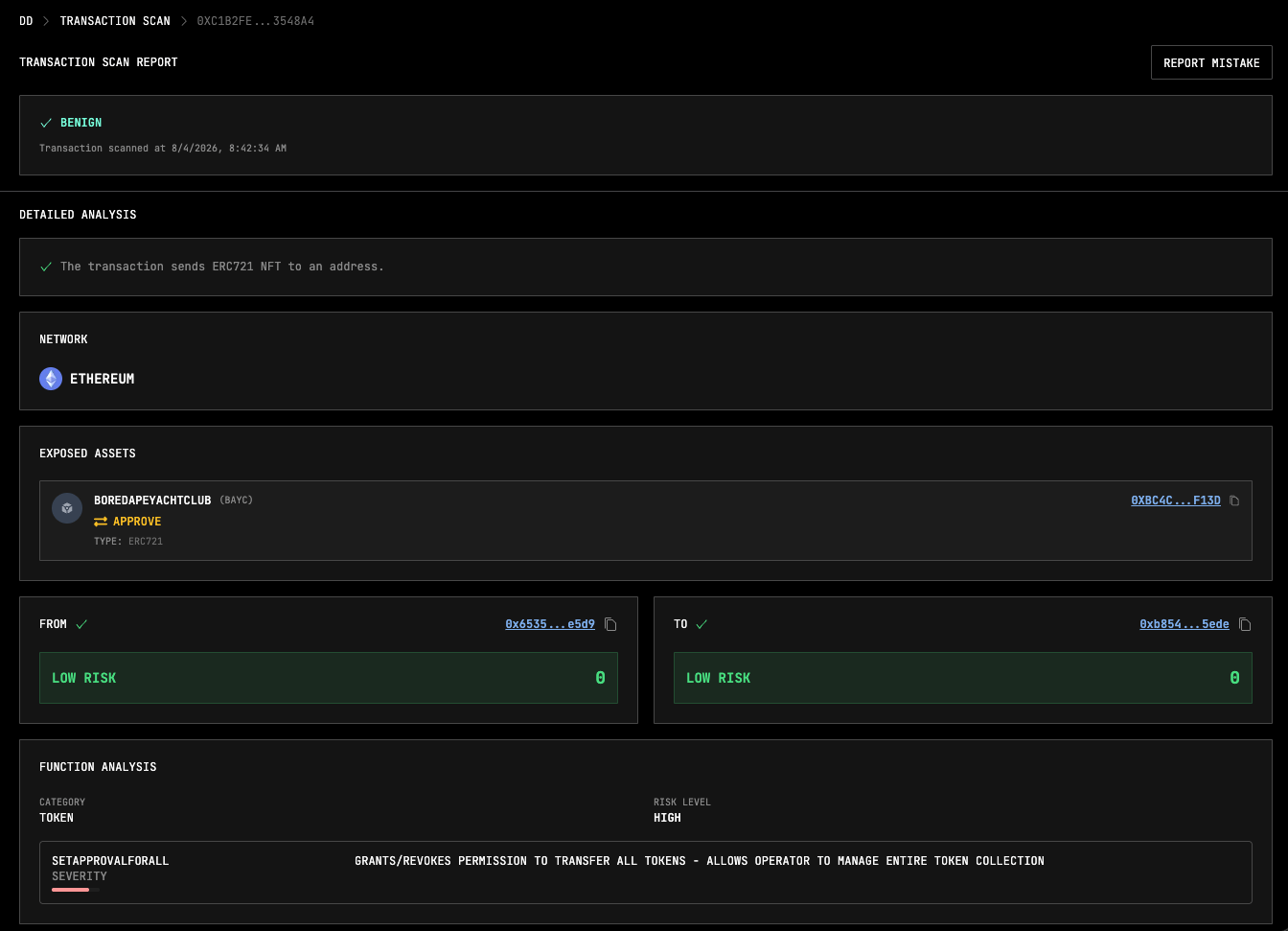
Common Use Cases
- AML transaction monitoring
- Treasury monitoring
- Exchange deposit and withdrawal monitoring
- Pre-sign transaction simulation
- Transaction policy enforcement
- Fraud detection
- Compliance workflows
- AI-powered transaction approval
Built for Real-Time Decisions
Unlike traditional monitoring systems that operate after a transaction has occurred, Webacy can evaluate transactions before, during, and after execution. This enables organizations to block malicious interactions, investigate suspicious fund flows, monitor treasury activity, and automate policy decisions using real-time blockchain intelligence.What’s Next
Smart Contract Analysis
Analyze smart contracts for security vulnerabilities, privileged functionality, governance controls, and operational risks.